
Never buy store eggs again.
Everything I've learned in two years of backyard farming in the Florida Keys, from the first three hens to a yard that feeds itself. Chickens, bees, garden and rainwater, in one 33-page field guide.
 By Stryder Graft, founder of Graftwild. Nearly 200K people follow the homestead on Instagram.


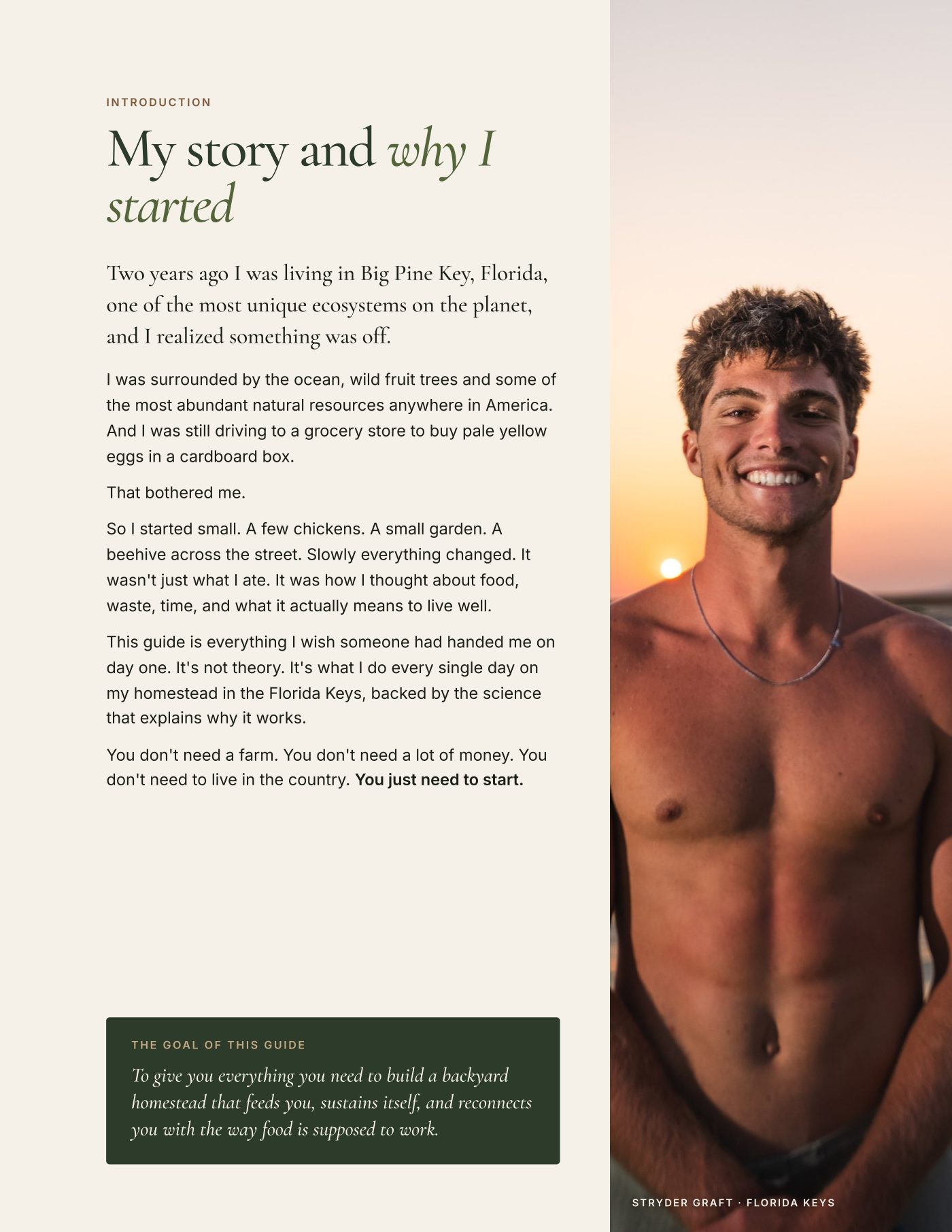
Hey, I'm Stryder.
Two years ago I was living in one of the most abundant places in America and still buying pale eggs in a cardboard box. That bothered me, so I started with a few chickens.
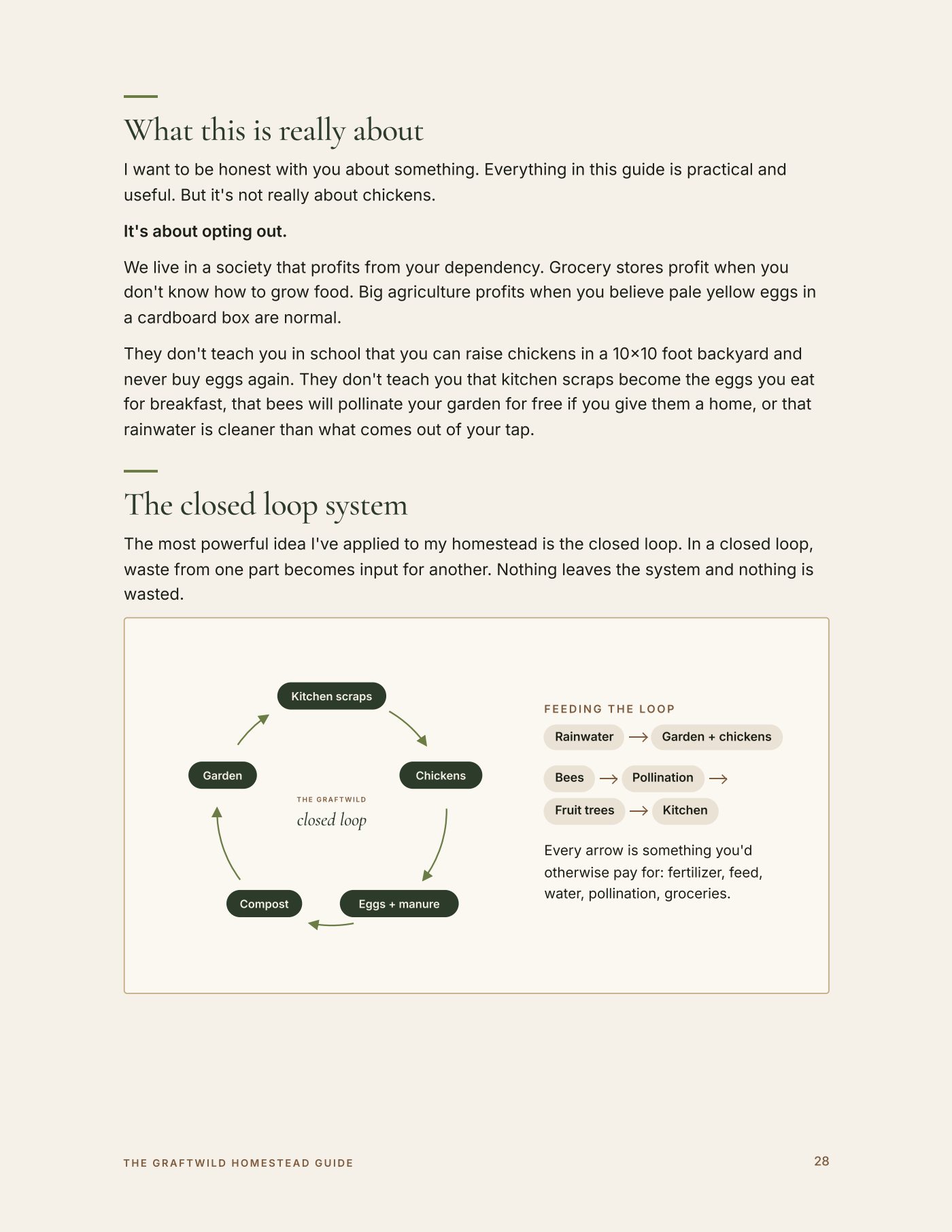
Today my backyard in Big Pine Key runs as a closed loop. Kitchen scraps feed 18 hens, the hens feed the garden, a beehive pollinates the dragon fruit, and every drop of water comes off the roof. I share all of it with nearly 200K people on Instagram.
This guide is everything I wish someone had handed me on day one.
- 18Hens
- 12–15Eggs a day
- 1Beehive
- 1,000Gallons of rainwater stored
- 2Years of real practice
You don't need a farm. You need a starting point.
Most homesteading advice assumes forty acres and a tractor. This guide was written in a backyard in Big Pine Key, where 18 hens, one hive and a few fruit trees run as a closed loop. It isn't theory. It's what I do every day, plus the science that explains why it works.

Eight chapters. One closed loop.
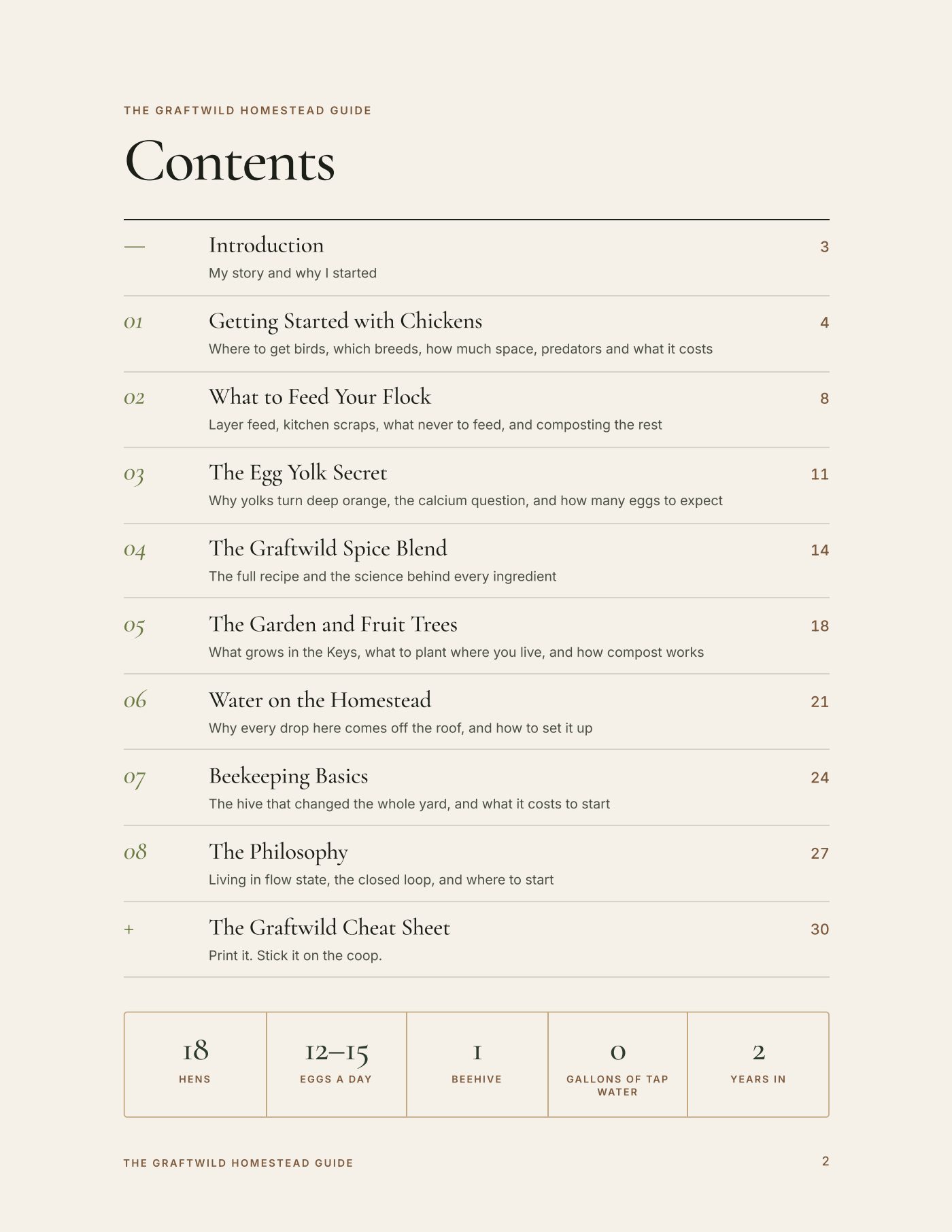
Each chapter covers one part of the homestead: what I do, what it costs, and why it works.
- 01
Getting Started with Chickens
Where to buy birds, the best beginner breeds, space rules, predator proofing and a full startup budget.
- 02
What to Feed Your Flock
The 90/10 rule, which kitchen scraps they love, and seven foods that can kill a hen.
- 03
The Egg Yolk Secret
Why yolks turn deep orange, the calcium question, and how many eggs to expect by breed.
- 04
The Graftwild Spice Blend
My daily flock supplement: the exact recipe and the research behind every ingredient.
- 05
The Garden and Fruit Trees
What grows in the Keys, what to plant in your zone, and how compost actually works.
- 06
Water on the Homestead
Why every drop here comes off the roof, and the five-part system to collect it.
- 07
Beekeeping Basics
The hive that changed the whole yard, the pollination math, and a startup cost list.
- 08
The Philosophy
Opting out, the closed loop, and how to start wherever you are.
- +
The Cheat Sheet
The whole system on two printable pages. Stick it on the coop.
The Egg Yolk Secret
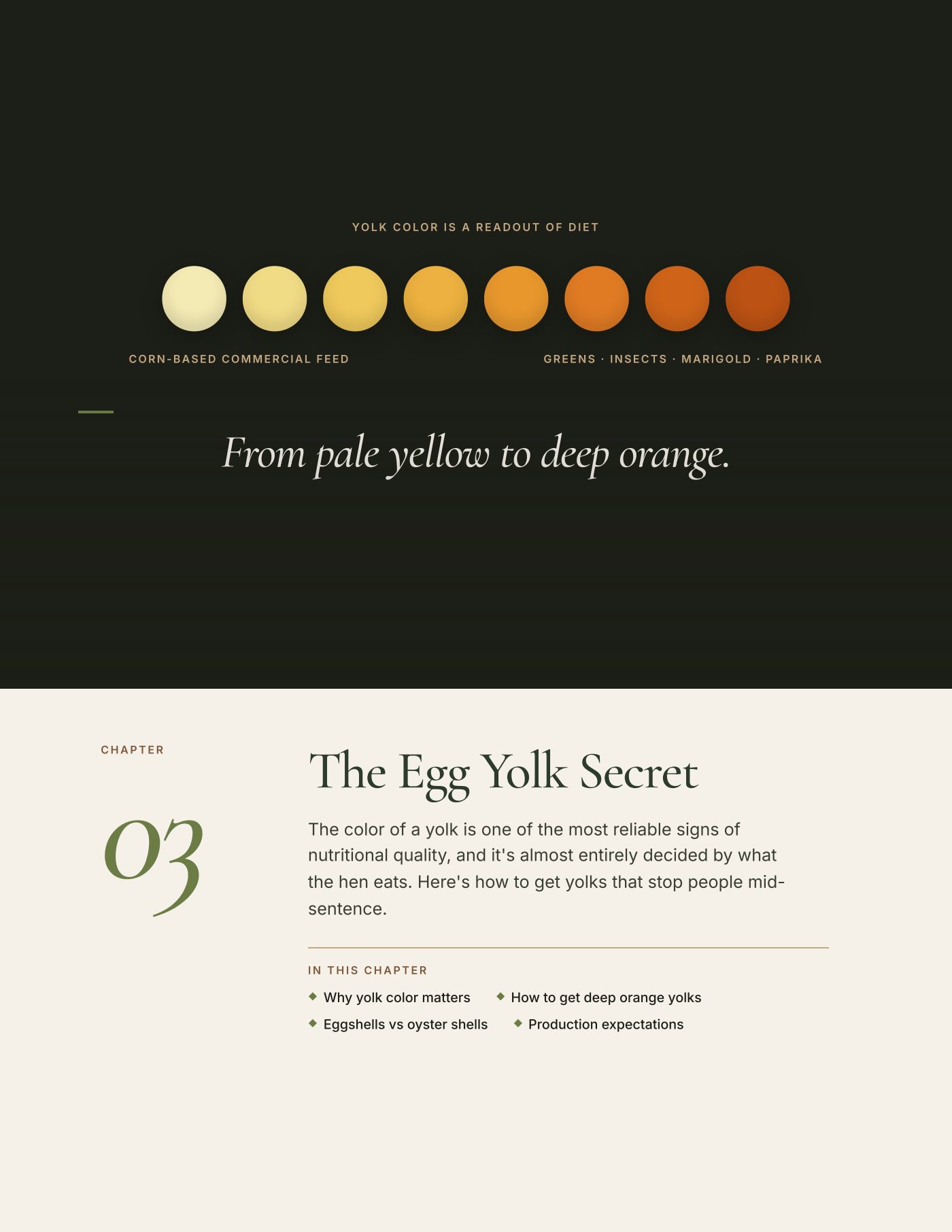
Pale yolks are a diet problem, not a breed problem. Hens can't make yolk pigment. Every bit of color comes from what they eat, so the fix shows up in days.
- The six foods that deepen yolk color fastest
- Oyster shell vs eggshell, and the calcium mistake that weakens hens
- Eggs per year for five beginner breeds
 Full recipe inside
The Graftwild Flock Spice Blend
Seven kitchen ingredients, mixed in a mason jar and sprinkled on the feed every morning. It's the supplement I built to give backyard birds what wild jungle fowl get from foraging.
- Exact amounts for 18 hens, and how to scale it
- What each ingredient does, with the research behind it
- Adjustments for ducks, quail, turkeys and meat birds
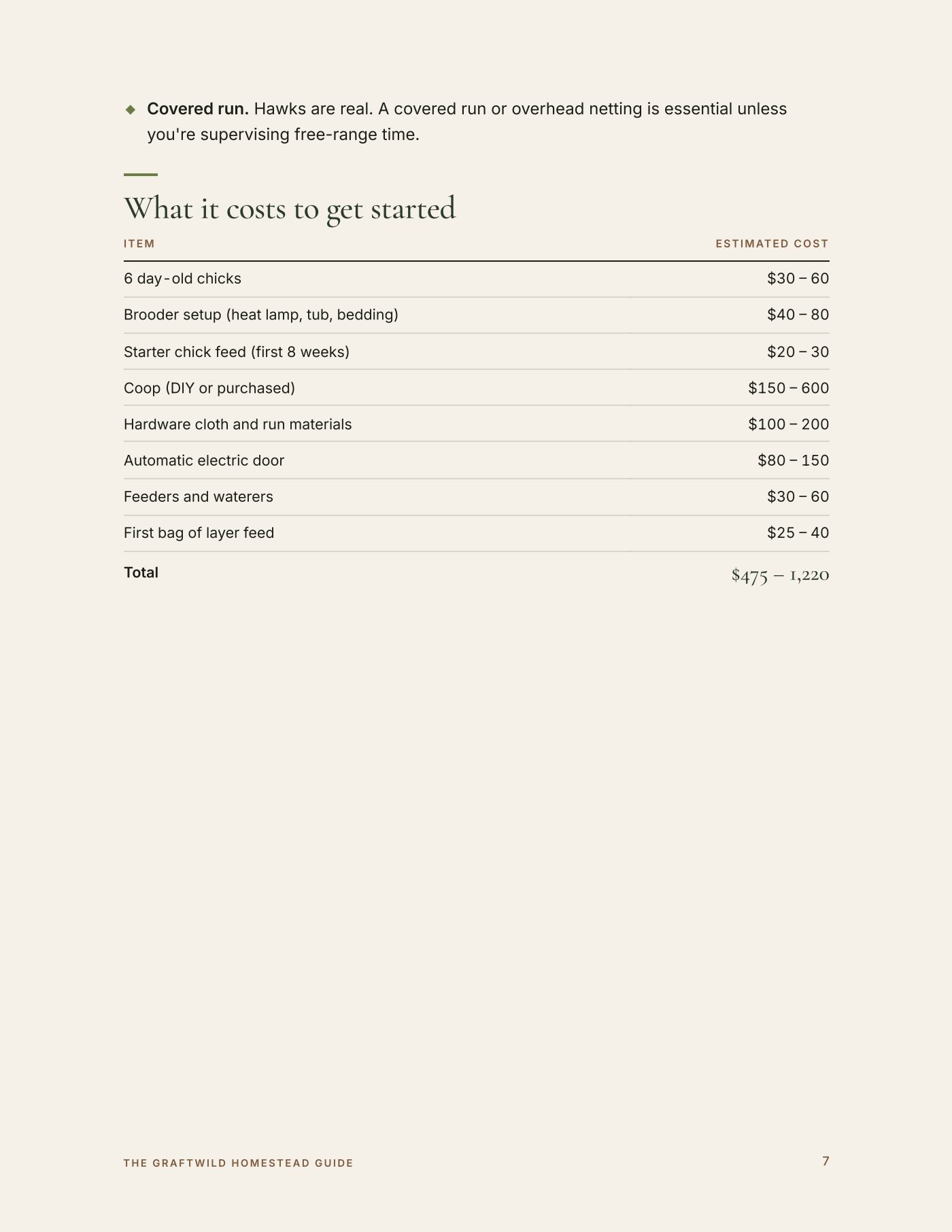
What it actually costs
No vague "it depends." Every chapter that involves spending comes with a line-item budget from my own homestead.
- Chickens: $475–1,220 to start a 6-hen flock
- Feed: $75–110 a month for 18 hens
- Bees: $420–715 for a full starter hive
- Eggs: what your flock produces at $7 a dozen
Designed like a field guide.
Not a Google Doc exported to PDF. Every page is laid out to read well on a phone and print well on US Letter.
Start smaller than you think.
The most common thing people tell me is "I wish I could, but I don't have the space." You have more than you think.
A tiny backyard
Three hens in a 4×4 coop. That's 2–3 eggs a day, and you can start for under $300 with a DIY coop.
An apartment
Herbs on a windowsill and a compost bin for your scraps. Connect with the food system in the smallest way.
More space
Follow the whole guide. Chickens, then bees, then fruit trees. Build the system one layer at a time.
Before you grab it.
What exactly do I get?
A 33-page designed PDF: an introduction, eight chapters and a two-page printable cheat sheet. You get the download link right after checkout. It works on any phone, tablet or computer, and prints on standard US Letter paper.
I don't live in Florida. Will this work for me?
Yes. Chickens, compost, bees and rainwater work nearly everywhere. The breed advice covers both heat-tolerant and cold-hardy birds, and Chapter 5 includes what to plant in temperate zones 6–8. Always check your local rules on poultry, bees and rainwater first.
I've never kept chickens. Is this too advanced?
It's written for day one: where to buy birds, which breeds to start with, how much space you need, how to predator-proof, and what it all costs. The advanced material, like the spice blend and the closed loop, builds on those basics.
How much will it cost me to get started?
The guide breaks it down line by line: $475–1,220 for a six-hen setup, under $300 for three hens with a DIY coop, and $420–715 for a starter beehive. Once the flock is laying, feed runs about $75–110 a month for 18 hens.
Is the spice blend recipe really in there?
All of it: seven ingredients with exact amounts, how to use it, why each ingredient is in the jar, and how to adjust it for ducks, quail and turkeys.
Your first three hens are closer than you think.
Two years of trial, error and deep-orange yolks, in one field guide you can read tonight.
Get the guide $37